
Exploring the Science Behind Nearsightedness
Scientific Research on Myopia Management
Exploring the Science Behind Nearsightedness
Myopia, often known as nearsightedness, is a common vision disorder affecting millions worldwide. While genetics play a significant role, environmental factors contribute to its progression, with high myopia posing serious risks to eye health.
Researchers and clinicians worldwide are committed to finding solutions to tackle the rising myopia epidemic. Scientific research and clinical trials deepen our understanding of this condition and allow for effective management strategies.


Understanding Myopia Progression
Myopia typically results from axial lengthening in the eye. To address this, researchers have focused on several promising areas:
-
Spectacle Correction
Glasses have long been studied to inhibit myopia progression. However, while some designs have shown promise, not all have been clinically effective. Recent advancements like the Defocus Incorporated Multiple Segments (DIMS) spectacle lens, designed to induce myopic defocus, have yielded encouraging results. Reducing axial length by 0.30 mm over two years offers a potential solution for myopia control, particularly for children.
-
Outdoor Sunlight
Increasing outdoor time during school has shown a modest but tangible effect on reducing myopia progression. Studies suggest that 40 extra minutes of outdoor exposure daily can make a significant difference. However, the implementation has been challenging, and more research is needed to evaluate the long-term impact across diverse populations.
-
Low-dose Atropine
Low-dose atropine treatment has gained popularity, particularly after studies like the Atropine for the Treatment of Myopia (ATOM) series. While the 0.01% concentration has shown effectiveness, the Low-Concentration Atropine for Myopia Progression (LAMP) study suggests that higher concentrations may offer more profound results. Atropine is easy to implement, especially for young children, with minimal side effects. However, long-term data regarding potential ocular toxicity is still pending.
Controlling Myopia with Contact Lenses
In recent years, contact lenses have emerged as a promising avenue for myopia control:
-
Orthokeratology
Orthokeratology (ortho-k) lenses, worn overnight to reshape the cornea temporarily, have shown promise in reducing axial elongation by 55% after 24 months. However, these lenses have limitations and may not correct higher levels of myopia.
-
MiSight Contact Lenses
The FDA-approved daily wear MiSight lens is a breakthrough in myopia control. Its dual-focus design creates myopic defocus and has demonstrated a reduction in myopia progression and axial length. This daily disposable lens offers an alternative to ortho-k, providing clear vision during the day without lenses. The ongoing MiSight clinical trial aims to provide more insights into its long-term efficacy and safety.
Patient Reviews
4.8
475 Reviews
maia w.- Sep 19, 2026
Everyone at this office was so nice, but especially Dr. Johnson. I really appreciated how attentive ... Show Moreand kind he was during my eye exam. Definitely recommend!
Niles K.- Sep 13, 2026
I've been coming to Eyes of the World for several years now, and every time it's been a very smooth ... Show Moreexperience. The staff are always professional, efficient, and friendly. Plus, their automated system automatically follows up with you every year to schedule another eye exam and refill contact prescriptions, which is always a helpful reminder.
My only complaint is about my insurance coverage/what insurance they accept. To be fair, this is more of an issue with the policies I've purchased rather than Eyes of the World, but I've had to change insurance twice in the last two years, and they did not accept my coverage either year (Cigna last year, Select Health this year). Eyes of the World notified me in advance on my recent visit, so I knew the costs going into the appointment, but it would be great if they could help make recommendations on insurers or policies to get in the future. On my most recent visit, I had an eye exam and ordered a new year's supply of contacts, and both services cost over $250-$300.
It sounds obvious, but I just wanted to share my experience: If you want to keep costs low, make sure your insurance covers the eye care services that you need. Regardless, this location is a great practice and will definitely meet your eye care needs.
Myopia Management in City Park West


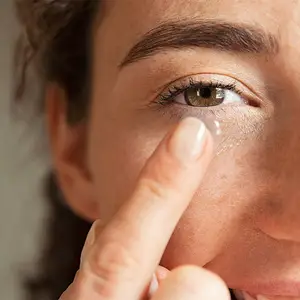
Eyes Of The World - City Park West: Pioneering Myopia Management
There have been various scientific breakthroughs in myopia management. However, the choice of treatment depends on the child's age, preferences, and eye condition.
At Eyes Of The World - City Park West, we are committed to keeping up with the latest advances in myopia management research and providing you with the best possible care. Our top priority is your child's eye health. Visit us today and explore the latest advancements in myopia care for healthy eyes and clear vision.